
Home Is Where Transformation Takes Root: Integrating Growth as a Leader
Subscribe
After any major transformation—whether it’s personal growth, a new role, or a deep leadership breakthrough—there’s always that moment when you “come home.” You return to familiar places, people, and routines that may not have changed while you were away.
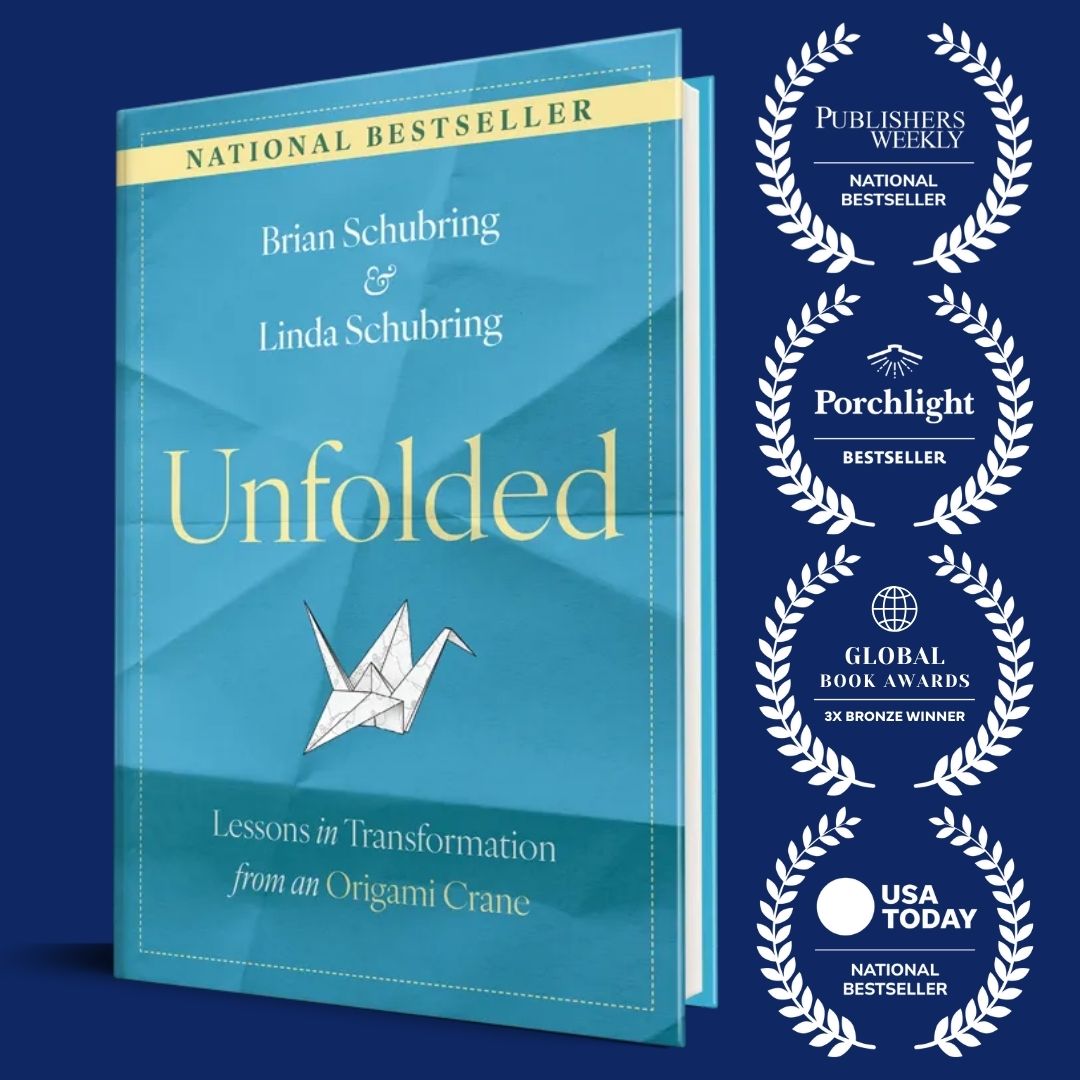
That’s where Chapter 5 of Unfolded: Lessons in Transformation from an Origami Crane begins. It’s titled “Home,” and in this episode of The Leadership Vision Podcast, I talk with Dr. Linda and Brian Schubring about what happens when we return home different.
Home, as they describe it, isn’t the end of the journey. It’s where the real work of transformation begins.
“Part of returning to home is to be in a place where we can rest and be restored… so we can fly again.” — Brian Schubring
Why “Home” Matters for Leaders
For Brian, this is one of the most meaningful chapters in Unfolded. It’s where the allegory of OC—the origami crane who has dreamed, played, tried, and flown—comes full circle. Home symbolizes the process of returning to our authentic selves after being stretched and transformed.
As leaders, we know what that feels like. After a project, a risk, or a season of intense growth, we return to teams, families, or communities that may still view us as we were. That gap—between how much we’ve changed and how little the world has—can be both grounding and painful.
Linda reminds us that home doesn’t always mean comfort:
“It might begin with a soft landing,” she said, “but it quickly gets rough. Transformation costs something—and yet it’s worth it.”
This tension between the soft landing and the hard reality captures what many leaders experience when they return from a big learning moment or a life-altering change.
“To Learn to Fly Is to Learn to Love”
The emotional center of this chapter comes from a line Brian wrote through the voice of the owl:
“Remember, to learn to fly is to learn to love—to love and accept yourself for who you are.”
When I asked Brian about it, he shared that it was born from his own three-year journey toward mindfulness and self-acceptance. “True flight,” he said, “begins with loving who you are, as you are, right now. That’s what sets things free.”
For leaders, this is powerful. Before we can lead others well, we have to integrate who we are—our strengths, our vulnerabilities, and our lessons. It’s what allows us to lead from wholeness rather than from a state of striving.
As we talked, I found myself reflecting on how often leadership growth (and all growth, really), requires this same kind of self-acceptance. We take risks, we fail, we succeed, and then we face the people who knew us before. They might cheer. They might question. Some might even resist our change. And yet, the invitation is the same: to keep showing up authentically and willing to dream again.
The Voices at Home
In the book, when OC returns to the playground, she’s met with mixed reactions—some supportive, some dismissive, even mocking. Brian admitted that he intentionally wrote this section to mirror real life. After any significant moment of “flight,” people project their own fears or regrets onto those who’ve taken risks.
As I re-read that passage, I noticed how those external voices echoed our internal ones—the doubts that whisper, “Who do you think you are?”
Linda put it beautifully:
“If it were easy to love or accept ourselves, the whole world would get along. Transformation is hard. But those hard voices clarify what really matters and who we’re becoming.”
That’s something every leader needs to remember: criticism doesn’t always mean we’re off course. Sometimes, it confirms we’re flying higher.
Finding the Map Within
As OC reconnects with Turtle and YC, the story shifts toward the “map”—the metaphor for the inner wisdom, strengths, and potential we already carry. We don’t gain the map from flying; we discover it through the experience.
That idea struck me. As leaders, we often look outward for direction—books, mentors, strategies—forgetting that much of what we need to navigate change is already within us. The work of “coming home” is often about seeing that map again and using it to help others find theirs.
I like how Brian said, “The return home gives us the chance to really fly again, not only to give it away to somebody else, but also to rest, restore, and rejuvenate.”
Home, in other words, becomes both a classroom and a runway.
Don’t Fly Away—Fly Back
At one point, Brian shared a reflection that really stayed with me. He said,
“When OC experienced flight, she didn’t fly away—she flew back home.”
That’s a powerful image for leaders. Many of us, after achieving something meaningful, feel an urge to move on—to find the next significant challenge. But sometimes, the real growth is learning how to bring that transformation home—to share it, model it, and build others up because of it.
Airplanes aren’t meant to stay in the sky forever. They return to the hangar to be refueled and repaired so they can fly again. As leaders, we need the same rhythm: rest, reflection, and restoration.
“Home becomes the next launchpad.” — Dr. Linda Schubring
What to Reflect On
If you’ve experienced a season of transformation, consider these questions as you listen:
- What does “coming home” look like for you right now?
- How do you integrate what you’ve learned without minimizing it?
- Who is your “YC”—the person watching your example and ready to take their own flight?
- What rhythms of restoration keep you grounded between leaps?
As I listened back to our conversation, I was reminded that Unfolded isn’t just about personal transformation. It’s a manual for sustainable leadership. Growth isn’t about escaping—it’s about returning, wiser and more generous than before.
Listen & Reflect
You can listen to this full conversation wherever you get your podcasts or watch it on YouTube. Whether you’re leading a team, a classroom, or a family, I hope this episode helps you see “home” not as the end of your journey, but as the place where the next chapter truly begins.
About The Leadership Vision Podcast
The Leadership Vision Podcast is a weekly show sharing our expertise in the discovery, practice, and implementation of a strengths-based approach to people, teams, and culture. We believe that knowing your Strengths is only the beginning. Our highest potential exists in the ongoing exploration of our talents.
Subscribe
Please contact us if you have ANY questions about anything you heard in this episode or if you’d like to talk to us about helping your team understand the power of Strengths.
If you’d like to be featured on the Leadership Vision Podcast, let us know how you are using Strengths and what impact it has made. Contact us here!